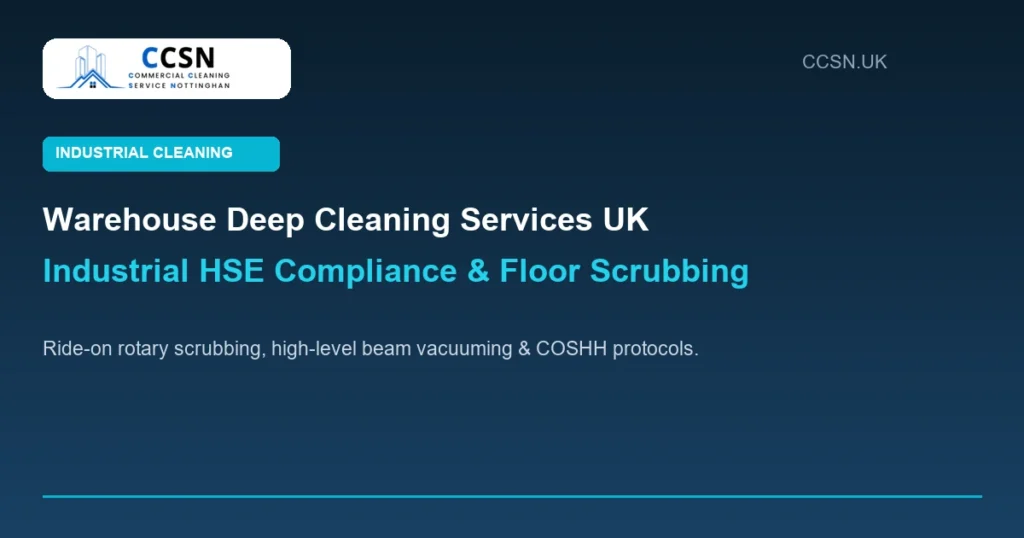
Managing extensive logistics centers, distribution hubs and industrial storage facilities across the United Kingdom demands rigorous structural sanitization standards. Accumulated concrete dust, diesel forklift exhaust emissions and pallet debris compromise operational efficiency and worker respiratory health.
Maintaining a compliant industrial workspace requires complete adherence to Health and Safety Executive workplace regulations and environmental protection mandates. Professional industrial cleaning specialists deploy heavy-duty scrubber driers and specialized high-level vacuum systems to restore safe warehouse working environments.
Core Operational Requirements for UK Industrial Warehouses
Industrial facility managers face strict legal obligations regarding slip resistance, fire containment and dust explosion prevention across active picking bays. Concrete surfaces continuously generate microscopic silica particles that damage sensitive barcode scanning electronics and degrade indoor air quality.
Routine daily sweeping frequently redistributes dry atmospheric dust rather than extracting hazardous particulates from high-traffic concrete transit aisles. Deep mechanical decontamination removes ground-in tire rubber marks, hydraulic oil spills and hazardous chemical residues from finished floor surfaces.
Warehouse Decontamination Matrix: Operational Protocols by Facility Zone
Establishing clear zoning schedules ensures that industrial facilities satisfy statutory British safety inspections without disrupting commercial supply chain operations.
| Warehouse Zone | Primary Contaminants | Mechanical Cleaning Method | Regulatory Benchmark |
|---|---|---|---|
| Forklift Transit Aisles | Tire rubber deposits and oil spills | Ride-on rotary scrubbing and industrial degreasers | HSE Slip Resistance Guidelines |
| High-Level Structural Beams | Settled silica dust and combustible fibers | HEPA filtered sky-vac extraction poles | DSEAR Explosive Dust Regulations |
| Pallet Racking Systems | Packaging debris and adhesive residues | Manual sanitization and vacuum extraction | SEMA Storage Safety Standards |
| Goods Inward Loading Docks | Road grit, moisture and vehicle soot | High-pressure hot water washing and wet scrubbing | Workplace Health Welfare Regulations |
| Mezzanine Storage Floors | Airborne particulate accumulation | Walk-behind scrubbing and antistatic mopping | Building Fire Safety Orders |
Systematically addressing these zones prevents dangerous slip accidents and guarantees complete audit readiness. Facility directors seeking additional surface protocols should examine our technical guide on industrial warehouse floor scrubbing and maintenance.
Mechanical Floor Scrubbing: Chemical Formulations and Equipment Selection
Heavy logistics hubs require industrial ride-on scrubbing machinery equipped with aggressive cylindrical scrubbing heads and twin vacuum squeegees. These specialized units deliver several hundred kilograms of downward brush pressure to loosen hardened oil stains in a single mechanical pass.
Industrial technicians formulate specialized alkaline degreasing detergents designed specifically to emulsify petrochemical deposits without etching protective concrete sealers. Modern detergent recovery tanks immediately suck emulsified liquids into sealed storage containers, leaving floors completely dry and slip-free.
This rapid mechanical drying process prevents costly warehouse downtime by allowing commercial forklift fleets to resume normal operations immediately. Facilities teams also consult our verified framework on post-construction industrial cleaning standards during warehouse expansion handovers.
High-Level Structural Decontamination and Fire Hazard Mitigation
Overhead roof trusses, HVAC ducting and light fittings accumulate substantial volumes of fine combustible dust over months of continuous operation. When disturbed by heavy warehouse airflow, settled particulates create severe explosive atmospheres governed by strict British DSEAR regulations.
Certified industrial cleaning contractors utilize carbon fiber suction poles and mobile elevating work platforms to extract overhead dust safely. Cleaning teams utilize industrial vacuums equipped with certified Class M or Class H HEPA filtration units to capture microscopic contaminants.
Extracting high-level debris prevents contaminated fallout from settling across freshly packaged retail inventory or sensitive manufacturing machinery. Periodic overhead audits protect commercial facilities against devastating industrial fires and ensure ongoing insurance policy compliance.
COSHH Compliance: Chemical Safety and Environmental Responsibility
Commercial cleaning operations in the United Kingdom must satisfy stringent Control of Substances Hazardous to Health regulations across every project. Specialist contractors maintain detailed safety data sheets and comprehensive environmental risk assessments for every deployed cleaning solution.
Modern industrial degreasers utilize biodegradable surfactants that break down naturally without contaminating municipal storm drainage systems or nearby waterways. Technicians install protective drain covers and chemical spill containment barriers around loading bays during intensive washing sequences.
In addition operators measure effluent pH levels before discharging wash water into approved industrial trade waste disposal networks. This rigorous environmental stewardship ensures complete compliance with local water authority bylaws and national environmental standards.
Specialized Wastewater Recovery and Trade Effluent Management
Industrial scrubbing generates substantial quantities of slurry containing suspended silicates, hydraulic grease and tire rubber particles. Discharging this concentrated trade effluent directly into surface water drains violates Environment Agency pollution prevention guidelines.
Certified industrial contractors deploy mobile wastewater filtration rigs that separate heavy particulate solids from collected scrubber washings. Filtered water undergoes chemical neutralization to adjust pH balances before lawful discharge through licensed trade sewer access points.
Contractors furnish facilities managers with official waste transfer documentation detailing the precise volume and disposal destination of all extracted sludge. Maintaining these comprehensive environmental records shields industrial enterprises from severe environmental fines and statutory regulatory enforcement actions.
Five-Phase Execution Plan for Industrial Facility Shutdowns
Executing scheduled plant shutdowns demands flawless coordination between facilities directors and specialized contract cleaning personnel.
- Conduct a thorough pre-clean hazard assessment to identify chemical storage zones, electrical conduits and high-risk traffic intersections.
- Isolate active electrical switchgear and sensitive production equipment beneath heavy-duty waterproof protective sheeting.
- Deploy high-level vacuum crews to extract overhead dust accumulations before commencing lower-level surface washing operations.
- Operate heavy ride-on rotary scrubbing machines systematically across perimeter walls, pallet racks and primary forklift routes.
- Conduct post-clean friction coefficient testing and deliver photographic audit sign-off packages for corporate governance records.
Following this structured schedule minimizes operational disruption while delivering pristine industrial environments that impress visiting safety auditors.
Frequently Asked Questions About UK Warehouse Deep Cleaning
How frequently should commercial logistics warehouses schedule deep floor scrubbing?
High-volume distribution centers operating twenty-four hours daily require quarterly mechanical floor scrubbing alongside ongoing routine maintenance sweeps. Lower-traffic storage warehouses typically schedule comprehensive deep decontamination bi-annually to maintain HSE slip compliance.
Can industrial cleaning operations occur without halting active warehouse operations?
Yes professional cleaning contractors execute zoned cleaning sequences during low-traffic night shifts or weekend windows without shutting down whole facilities. Segmenting active warehouse bays with safety barriers protects personnel while preserving critical order dispatch deadlines.
What certifications should facilities managers verify before hiring cleaning contractors?
Facilities managers must confirm that contract technicians hold valid IPAF access licenses, PASMA scaffolding qualifications and comprehensive COSHH documentation. Additionally reputable contractors maintain substantial public liability insurance and provide accredited SafeContractor or CHAS registrations.
Why is high-level dust removal mandatory under commercial property insurance?
Settled combustible dust represents a severe structural fire hazard that spreads flames rapidly across roof trusses during factory incidents. Insurance underwriters regularly inspect roof voids and can invalidate commercial property coverage if dust accumulations exceed statutory safety limits.
How does mechanical floor scrubbing improve warehouse operational efficiency?
Clean concrete floors eliminate tire slippage, which improves forklift battery efficiency and accelerates daily pallet picking cycles significantly. In addition removing abrasive sand particles protects expensive polyurethane forklift wheels from premature wear and costly replacement.